A Simple Guide to Mental Health Benefits in Your Utah Group Plan
Key Points:
- Federal law requires mental health coverage to be equal to physical health coverage — so if your plan covers a regular doctor’s visit, it has to cover a therapist visit the same way.
- Many group plans include an Employee Assistance Program (EAP), which gives employees and their household members free, confidential sessions with a mental health professional — no employer involvement required.
- You don’t need to tell your employer to use your mental health benefits. HIPAA protections apply just like they do for any medical visit — start by calling the number on the back of your insurance card.
Most people think of their health insurance as something to be used for doctor’s visits and the occasional urgent care run. But there are other kinds of emergencies that your health insurance is designed to help take care of—like your mental health.
This subject often feels like a separate conversation, and typically comes with considerably more friction and negative connotations. Questions about affordability, privacy, and social stigma can keep people from getting help, along with assumptions about logistics and potential bureaucratic hoops.
The reality is that accessing mental health support has become a lot easier in recent years, as coverage has evolved to include benefits that go well beyond what you’d expect—including tools that cost nothing and don’t require employer involvement.
Here at Ark, our goal is to make insurance easier to understand. So let’s break down mental health coverage in Utah and what’s available:
What the Law Already Requires
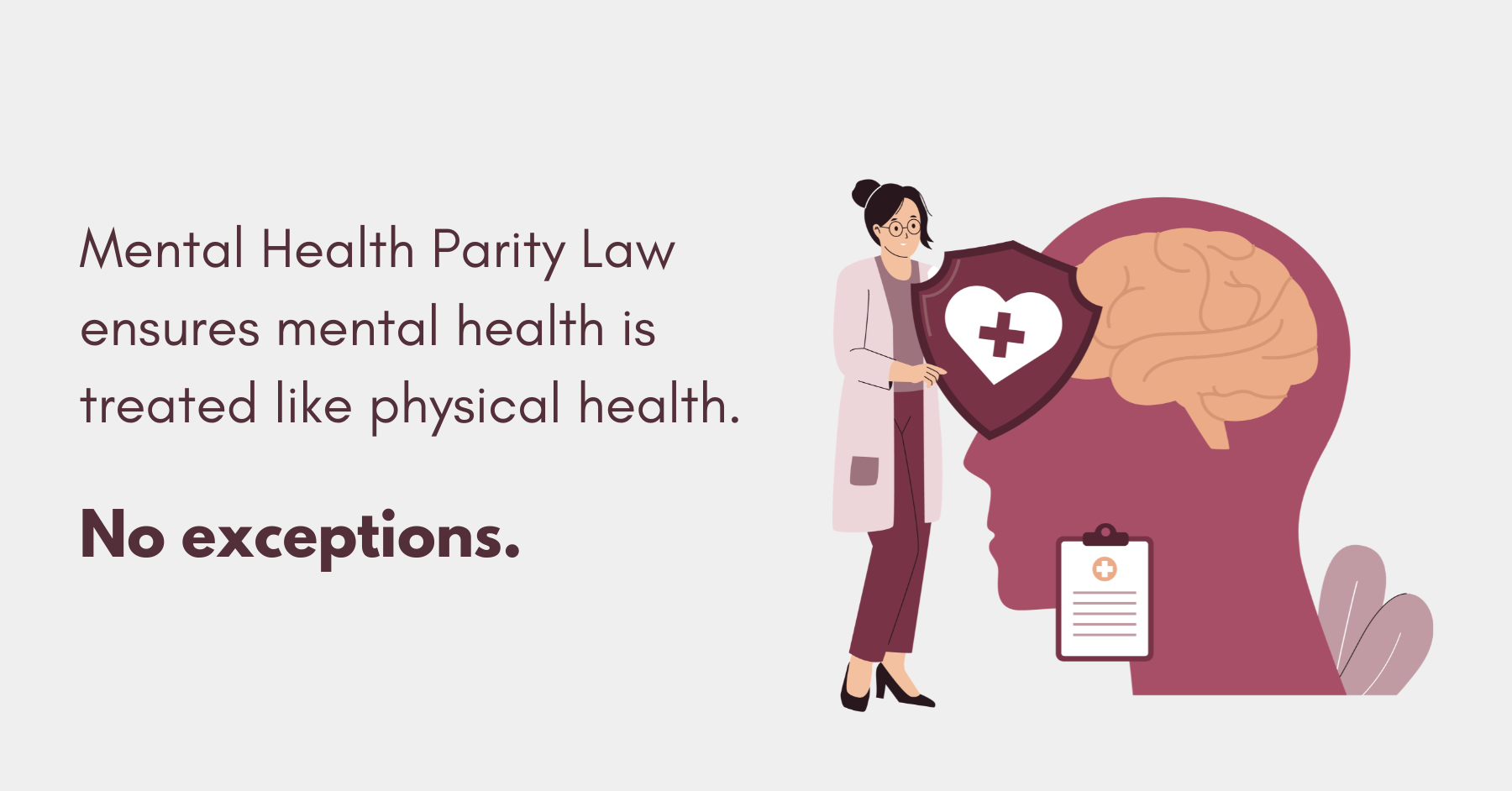
Thanks to Federal Mental Health Parity Law, group health plans are required to treat mental and physical health conditions equally. This means that if your copay for a primary care doctor is $25, your copay for a licensed clinical social worker should also be just $25. If telehealth medical visits are covered at no cost, telehealth therapy should be too, and so on. Deductibles and out-of-pocket maximums have to work the same way for mental health as they do for any other medical treatment.
“There’s this perception that there’s a barrier to access, when often there’s not,” says Rebecca Yates, Ark Founder and CEO. “It’s easy to assume that you have to meet your deductible in order to get care. And that’s just not accurate for most people on a group plan.”
Coverage denials for mental health visits that were routine a decade ago are far less frequent now. And your group plan might also include an Employee Assistance Program, which we’ll talk about next.
Employee Assistance Program
Many group health plans (but not all) now include something called an Employee Assistance Program, or EAP. This program gives employees confidential access to mental health support that can be used for a wide range of life situations; like financial stress, legal questions, grief, relationship difficulties, caregiving strain, work pressure, and more.
“It gives people a starting point when something is causing personal stress and they don’t know what to do with it,” says Yates. Most of these programs include a set of free sessions and coverage extends to everyone in the employee’s household.
For employers, the cost for an EAP can range from zero to a small monthly fee. When it’s an add-on, the cost is usually minimal and well worth the expense. More comprehensive platforms also exist—like Nivati, a Utah-based, woman-owned company founded during COVID specifically to address workplace mental health gaps. Nivati offers unlimited therapist access, a wellness content library, and HR team support tools.
What’s included in your group plan’s EAP varies by carrier—Regence Blue Cross Blue Shield and SelectHealth offer it as an add-on. That’s why it’s a good idea to ask about this kind of coverage when you’re reviewing any group plan, especially since it can make all the difference for you or someone on your staff who’s trying to get through a rough time.
What This Means for Employers
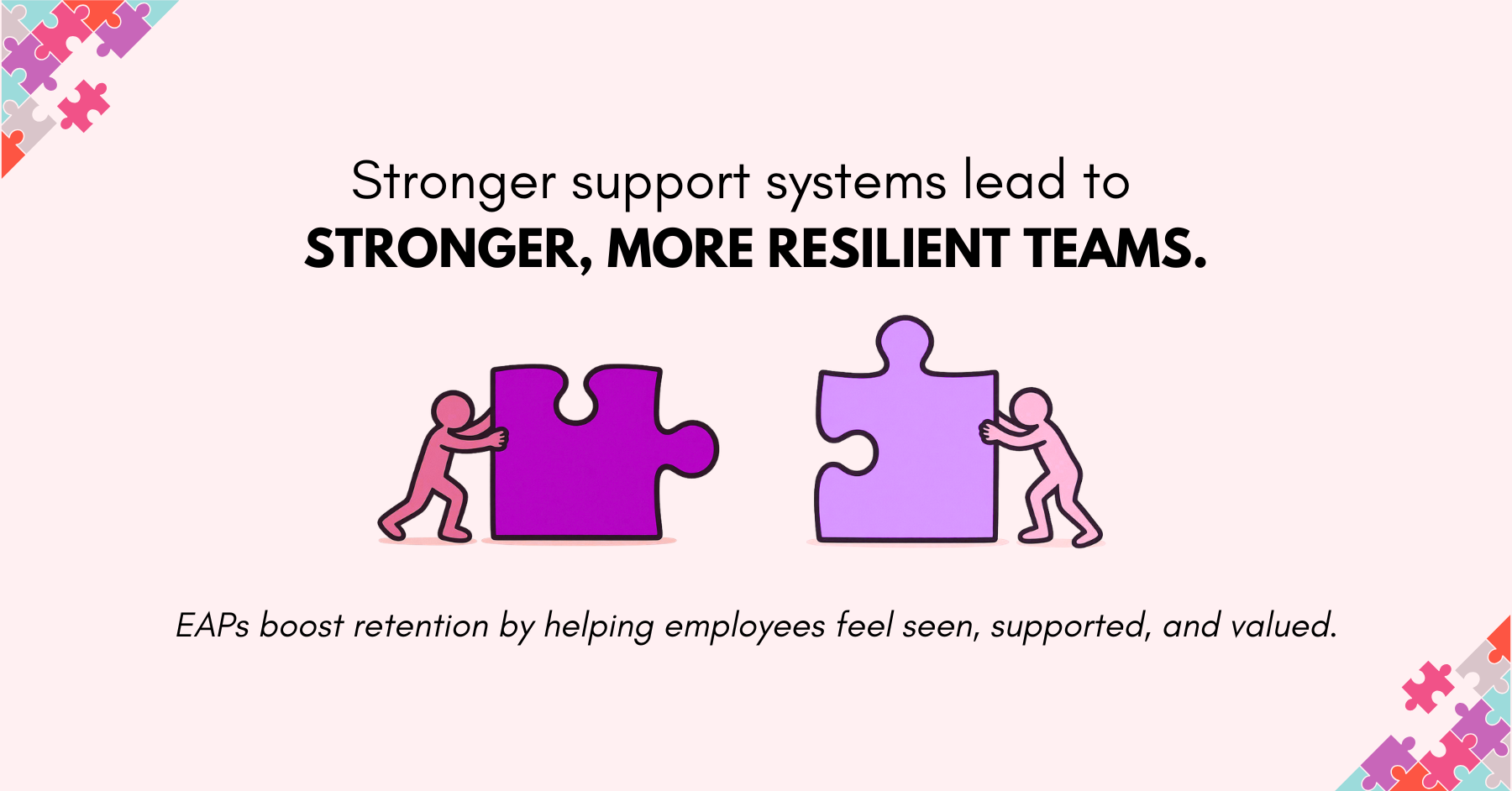
“When your employees feel supported at work, they’re much more likely to want to be there and stay over the long term,” says Yates. “It’s such a simple thing, but it matters—especially right now, when stress levels are so high.”
Beyond staff retention, an EAP protects your team’s dynamic and encourages a healthy workplace culture. It gives people a channel that doesn’t require a detailed conversation with a manager. There is a specific resource and telephone number people can call, or they can give it to another member of their family who might also need help. Many EAPs also include learning sessions, managerial coaching, team resilience workshops, and other tools.
The Bigger Case for Mental Health Care
Part of what keeps people from using mental health benefits is an outdated idea of what it’s intended for. “Mental health does not look like what it did a couple of decades ago,” says Yates. “It’s just like any other self-care. You go out and take a walk, you get on the treadmill — you do those things because you’re taking care of yourself. Your mental health requires the same kind of upkeep. You don’t have to wait until circumstances are dire.”
Just like preventive care in your medical life, it’s important to talk to someone before things become a much larger issue. A few EAP sessions during a hard stretch, a telehealth therapy visit during a difficult family transition, or a conversation with someone trained to help can be incredibly effective in dealing with stress.
“Right now, we’re confronted with enormous amounts of stress in our lives. And we have so many more tools to take care of ourselves than any previous generation did. But how can we use them if we don’t know anything about them?”
Getting Past the Hesitation
One of the most common barriers to using mental health benefits is the assumption that doing so means telling your employer. It doesn’t. Just like with medical issues, HIPAA protections apply here.
The fastest way to find out what resources you actually have available is to call the number on the back of your insurance card, and you don’t need to ask your employer first. Once you’ve made that first call, you also have the right to find a therapist or counselor who fits you best.
“If someone doesn’t fit, keep looking,” says Yates. “Once you find your person, you stick with them.”
And if you’re on a high-deductible plan and concerned about cost, don’t be afraid to call your insurance provider and ask about free or inexpensive resources. Between EAP sessions and telehealth options covered under parity law, most people on a group plan have a path for accessing support that doesn’t require meeting a large deductible first.
What if You Don’t Have Coverage?
If you’re on an individual plan, between jobs, or without insurance, Utah has strong statewide resources available, regardless of your insurance status, income, or documentation.
988.utah.gov, which is administered and funded by the Utah Department of Health and Human Services, is a really good place to start. You do not need proof of insurance, citizenship, or a social security number. The site connects to the crisis line, the Safe UT app for text-based counselor chat, the 211 helpline for housing and social services, the Utah Domestic Violence Coalition, and mobile crisis outreach teams.
“These are all state-sponsored,” says Yates. “They’re all things our taxes pay for. It’s already paid for and here to take care of you.”
If you’re not sure what your current plan includes, or you’re interested in building a benefits package that includes mental health resources, Ark Insurance is happy to help. Give us a call at 801-901-7800 or click here to schedule an appointment with us.