
Call a Licensed Insurance Agent: (801) 901-7800 TTY: 711
By calling this number, you will be directed to a Licensed Insurance Agent.
Hours of Operation: Monday – Friday, 9:00 AM – 5:00 PM MT
TPMO Disclaimer: We do not offer every plan available in your area. Currently we represent 8 organizations which offer 45 products in your area. Please contact Medicare.gov, 1-800-MEDICARE, or your local State Health Insurance Program (SHIP) to get information on all of your options.
Not affiliated with or endorsed by the government or the federal Medicare program.
Ark Insurance Solutions is a licensed and certified representative of Medicare Advantage organizations and stand-alone prescription drug plans. Each organization has a Medicare contract. Enrollment depends on contract renewal.
Connect With Us On Social Media





Evaluating Health Insurance Broker Bids: A Guide For Getting Through The Process
/by The Ark Insurance TeamMost business owners never learn how to evaluate health insurance broker bids, and that’s completely normal. After all, no one ever hands you a road map or explains how this process works. But if you get it wrong, it can affect your costs and compliance for the entire year.
So, what’s the best way to choose a broker you can trust? Here’s where to start:
How To Choose An Insurance Broker
The best way to find a good broker is actually through word of mouth. Ask other business owners for recommendations, talk to your friends and neighbors, and make sure you inquire about any bad experiences. You can also check with the state’s Department of Insurance to see if there are any complaints about brokers you’re considering.
All of this matters, because you can’t evaluate a broker from a bid or even their marketing material. Colleagues or fellow business owners can speak to how a broker performs during a renewal or when a problem arises.
“You want to find out how they handle things under pressure,” says Rebecca Yates, CEO of Ark Insurance Solutions. “Recommendations from within your personal circle are a great place to start.”
Not Every Business Needs Multiple Bids
Do you have fewer than 50 employees on a fully insured ACA plan? Then you don’t need multiple bids. Every broker gets access to the same rates on that plan type. It’s guaranteed-issue and community-rated, so there’s no room for one broker to negotiate a better deal than another. The rate is the rate, no matter who brings it to you.
“This is why you’re going to want to find your broker first, then do the bidding. They can help guide you based on your number of employees,” said Yates.
Multiple bids make sense once you’re dealing with partial self-funding, self-funding, non-ACA plans, or a large group. Below that line, you just need to find one broker and work with them directly.
Watch For Numbers That Don’t Match
Not all bids compare the same metrics due to changing census data or simply human error. This can affect the bottom-line price you receive from each carrier, and it will skew your perception if you’re not careful.
“I can take one census and send it to every single insurance carrier, and they’ll all come back with a different count,” Yates says. “It doesn’t matter that I’m sending them all the same census data on the number of people enrolling. Oftentimes, none of them match.”
A good broker can help you make sure enrollment counts are what they should be when evaluating bids. That way you don’t end up comparing bids that don’t measure your group the same way.
Commission structure also deserves the same scrutiny. Brokers can get paid in several ways—through a per-member-per-month fee, carrier overrides, broker fees, reinsurance fees, network fees, and sometimes even trips or bonuses. None of that is necessarily a problem. But a broker who’s earning a hidden bonus for steering you toward a specific carrier doesn’t always have your best interests in mind. You should know that the law requires brokers to disclose their compensation. If yours doesn’t offer that information upfront, ask for it.
Give Yourself Plenty Of Lead Time
Rates change monthly, tied to the carrier’s own pricing cycles. If you move too slowly through the bid process, the rate you were quoted may no longer be available by the time you’re ready to sign.
A straightforward bid and install process typically takes approximately three to four months. Larger groups should plan for six months or more, because carriers take longer to underwrite bigger, more complex groups. Carriers also don’t release rates far in advance—small groups may get as little as 60 days’ notice, and renewals often come with even less lead time.
Your final rate can also shift after the bid, and it’s not necessarily the broker’s doing. If your group isn’t on a small, fully insured ACA plan, the underwriter reassesses risk based on who actually enrolls, not just who you initially expected to enroll. For example, a company might submit a census expecting 20 enrollees and end up with 16. Extenuating circumstances like this can move your installed rate up or down from what the bid originally showed.
A Good Broker Shows You Every Bid
Does your broker show you every bid they received, or just the ones that make their recommendation look best?
“I always show my clients all of the bids we received. Not every broker does that, but I want you to be able to see that we went to the whole market,” Yates says.
Seeing every bid, including the bad ones, is how you confirm nobody’s thumb is on the scale. A broker with real experience can tell you which plan actually fits your workforce, not just which one is cheapest.
You Can Switch Brokers Anytime
Most business owners think they’re stuck with their broker until renewal. But they’re not. Switching just requires an Agent of Record letter, a signed document that moves your account without touching your plan.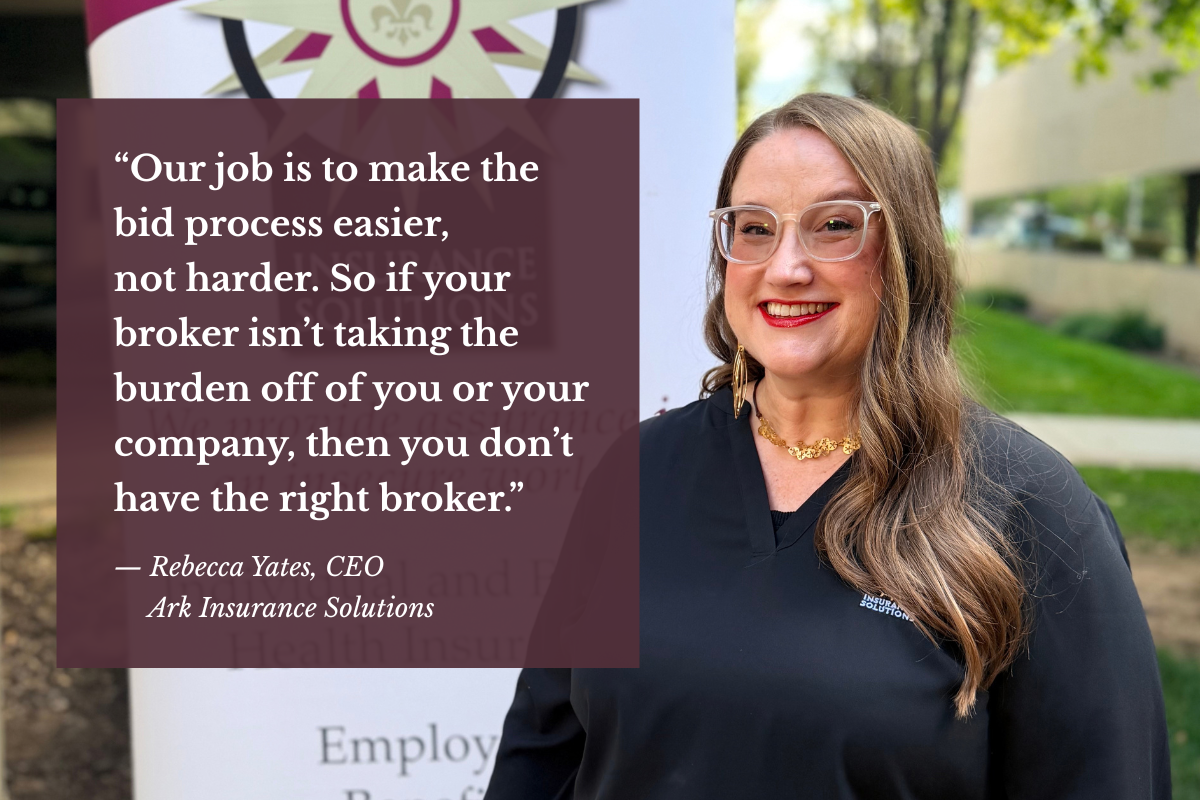
Carriers build in a five-day waiting period before the switch takes effect, and that delay exists for a reason—it gives your current broker a chance to confirm the switch is legitimate before it goes through. They cannot block the switch—they can only use those five days to raise a flag if needed, not to stop it.
Get A Second Opinion
You don’t need to switch brokers to get another set of eyes on bids you already have. Ark’s licensed consultants will review existing bids for an hourly fee, with no stake in which one you pick.
A consultant reviewing bids this way isn’t earning commission on the outcome, so there’s no incentive behind making a specific recommendation or hidden compensation that you don’t know about.
“Because I’m not the broker bidding on any of it, I don’t have a hat in the game,” Yates says. “We can be the honesty police and let you know if something is off.”
Evaluating broker bids isn’t really about comparing numbers on a page. It’s about knowing which numbers to trust, which broker to trust, and how much time to give yourself before rates start working against you.
If you’re heading into a bid process for the first time, or if you’re sitting on bids right now and aren’t sure what you’re looking at, Ark can help. Give us a call at 801-901-7800 or click here to schedule an appointment today.
Medicare’s New GLP-1 Weight Loss Pilot Program
/by The Ark Insurance TeamIf you’ve been thinking about exploring weight management with a GLP-1, but unable to afford it due to limited coverage, we’ve got exciting news for you. Medicare just made a big change in how it covers weight loss medications, with an update on July 1 that launched a brand new pilot program. Eligible beneficiaries now have access to certain GLP-1 medications for weight management at a flat $50 copay, and the program is scheduled to run through December 2027.
If you’re on Medicare and considering GLP-1 medications, here’s what you need to know about how the program works, who qualifies, and what to do next.
How Does This Program Work?
Medicare’s pilot program gives eligible beneficiaries temporary access to select GLP-1 medications outside of what their Part D plan would normally cover. It’s run through Medicare, and to participate, you need to already have a Part D prescription drug plan, whether that’s a standalone plan or bundled into a Medicare Advantage plan.
This is a test model, so the rules and processes are still new. But if you meet the eligibility requirements and get prior authorization from your doctor, your qualifying GLP-1 medication could be available for a $50 monthly copay.
Who Qualifies?
Eligibility is based on body mass index (BMI) and, for some beneficiaries, certain related health conditions. An important aspect of this program is that it’s specifically geared toward weight loss, not diabetes management. A diabetes diagnosis alone doesn’t determine eligibility, and medications prescribed primarily for diabetes (like Ozempic) aren’t part of this particular pilot.
Which Medications are Covered?
Three GLP-1 medications are currently approved under the pilot: Wegovy (available as an injection or tablet), Zepbound (available as an auto-injector pen), and Foundayo, an oral tablet option. Beneficiaries who qualify and receive prior authorization can access any of these medications under this new program.
How to Get Started
The process for this program works much like any other prior authorization for a prescription medication:
If you don’t currently have a Part D plan, or you’re not sure whether your plan’s formulary includes these medications, we can help you find out. Our team can review your plan and help make sure it lines up with the medications you’re taking or hoping to take.
Already Taking a GLP-1?
If you’re already taking a qualifying GLP-1 and paying out of pocket, and your doctor has already documented your need for it, this pilot may lower your monthly cost significantly.
The details of that transition are still being worked out since the program is so new, but if you’re in this situation, it’s worth having a conversation with your doctor and your Part D carrier to confirm your next steps.
Mark Your Calendar for Annual Enrollment
Heads up: Medicare’s Annual Enrollment Period is around the corner, running from October 15 through December 7. It’s the best time to check in with your plan and make sure it still fits your needs. If you don’t currently have a Part D plan, this window is the best time to add one.
And if you already have a Part D plan, it’s also worth taking a look at all of your current medications and verifying that you’re getting the lowest price available to you.
This new GLP-1 pilot program is a big shift for Medicare beneficiaries who’ve wanted access to these medications for weight management, but haven’t been able to find an affordable way to get started.
If you have questions about how your Medicare plan works, or you’d like to make sure your plan covers the medications you need, we’re here to help. Give us a call at 801-901-7800 or click here to schedule an appointment with us.
What’s the Buzz? Could an ICHRA or QSEHRA Plan Be Right for You?
/by The Ark Insurance TeamIndividual Coverage Health Reimbursement Arrangements, most commonly known as ICHRA plans, have become increasingly popular in some areas as a flexible alternative to group plans. And since they represent a significant shift in how businesses approach health insurance, they’re worth knowing about.
ICHRA plans are relatively new. First introduced in 2020, they’ve gained some traction among businesses looking for an affordable group health insurance option. But, like anything else, ICHRA plans also come with potential drawbacks. Depending on what state you’re in, how many employees you have, and the overall health of your group, an ICHRA plan might not be the best option for you.
If you’re a business owner looking at alternative health plans like ICHRA or QSEHRA, we recommend getting an in-depth analysis with a trusted professional. While they can be particularly advantageous in states like Alaska, they aren’t so much in Utah — the nuance of which we’ll discuss below.
What exactly is an ICHRA plan?
In a nutshell, ICHRA plans allow employers to reimburse their employees for individual health insurance premiums and qualified medical expenses, and the reimbursement is completely tax-free. Rather than selecting and managing a one-size-fits-all group health plan, businesses can provide employees with a predetermined amount of money each month. Employees then use that money to purchase an individual health insurance coverage on the marketplace that best fits their specific needs.
Think of an ICHRA as essentially creating a personal expense account for each employee’s healthcare needs. When employees incur medical expenses or pay their individual insurance premiums, they can submit receipts for reimbursement up to their allowed amount. This arrangement offers a fair amount of flexibility, while still providing the same tax advantages that are typically associated with employer-sponsored health benefits.
Where ICHRAs shine
For some companies, ICHRAs present an attractive option, because they solve some of the most common challenges among business owners in providing adequate health benefits. This kind of control is valuable for growing businesses or those operating across multiple states.
ICHRAs also get rid of the administrative burden of managing a group health plan. No more annual renewal negotiations, plan design decisions, or employee enrollment periods. Instead, companies just have to decide what the employee reimbursement amounts will be and process employee receipts — this is something they should delegate to third-party administrators.
This arrangement can work pretty well for companies that have a diverse workforce spread across several states. Rather than trying to find a single group plan that satisfies everyone, employees can select the coverage that matches their needs. A young, healthy employee might choose a high-deductible plan with lower premiums, while an employee managing a chronic condition might opt for more comprehensive coverage.
The downside of ICHRAs
Despite their advantages, ICHRAs aren’t without potential drawbacks. And much of this depends on what state your business and employees are operating in. The success of an ICHRA program directly correlates with the strength of the individual insurance market in your area. So, if you take Utah for instance, the state has a much more affordable group market with excellent benefits, which ICHRA can’t compete with. It’s likely that employees would struggle to find better coverage with their ICHRA allowance. But in Alaska, ICHRA plans often present a more beneficial choice.
ICHRA also tends to work best for employers with more than 50 full-time equivalent employees. Once a business crosses that threshold, the ACA’s employer mandate requires it to offer coverage or face steep penalties, sometimes thousands of dollars per employee, per year. That puts industries like restaurants and hotels in a tough spot — high turnover and inconsistent enrollment make it hard for them to get a traditional group plan, even though they’re required to offer something.
An ICHRA sidesteps that problem, since there’s no group underwriting or participation minimum to overcome. For a large employer that can’t get enough people to enroll in a group plan, or whose plan has been canceled by the carrier, ICHRA can present an affordable path forward. But for a small shop with only a handful of employees, it usually isn’t the right tool for the job.
“ICHRAs tend to be better for those large employer scenarios where they’re trying to be compliant because now they’re going to get penalized if they’re not offering, but they can’t find a good way to offer,” says Rebecca Yates, CEO of Ark Insurance Solutions. “They can be a good alternative for businesses that have a hard time meeting participation.”
Employee education represents another challenge to the overall effectiveness of an ICHRA plan. Many workers are familiar with traditional group health insurance but they might find the individual market confusing. They’ll need guidance on selecting appropriate coverage, understanding how reimbursements work, and managing their healthcare spending.
Some employees might also miss the simplicity of having their employer choose their health plan. While flexibility can be helpful, it also means employees must take more active roles in their healthcare decisions. This responsibility can feel overwhelming, especially for employees who have never had to shop for health insurance before.
QSEHRA: An Alternative to ICHRA
If your business has fewer than 20 employees, there’s another option worth exploring: the Qualified Small Employer Health Reimbursement Arrangement (QSEHRA). It also gives you the ability to reimburse employees tax-free for individual health insurance premiums, but QSEHRA comes with IRS-set contribution caps that are adjusted annually for inflation. For 2026, that cap is $6,450 per year for self-only coverage and $13,100 for family coverage.
A properly structured QSEHRA allows employees to still claim ACA marketplace subsidies alongside their reimbursement. For a small team where most employees would qualify for subsidies anyway, that combination might make the most sense.
The ICHRA-versus-QSEHRA decision comes down to headcount, wages, and how your state’s individual insurance market compares, which is exactly the kind of analysis a knowledgeable broker can help you with before you commit to either one.
Tax advantages
These plans do have their tax advantages, with reimbursements that are tax-deductible for employers and tax-free for employees. This is a significant benefit compared to simply providing extra salary for healthcare expenses. It allows businesses to provide health benefits with the same tax advantages as traditional group coverage but with greater flexibility and often lower administrative costs.
ICHRAs and QSEHRAs can also help businesses better control their long-term healthcare costs. Unlike traditional group plans, where premium increases are the norm, employers can adjust their allowances based on their budget and business performance.
Choosing ICHRA
When it comes to implementing an ICHRA plan, you need to carefully plan and provide clear communication and assistance for your employees. This isn’t a decision to enter into lightly, and you shouldn’t do it without a broker. If your business has less than 50 employees and they aren’t making high salaries, it may be smarter to allow them to qualify for federal subsidies through the ACA marketplace instead, or explore your QSEHRA eligibility. Because there are so many caveats involved, it’s best to get help from a knowledgeable professional.
When choosing an ICHRA plan, businesses need to determine appropriate reimbursement amounts for different employee classes, making sure these amounts give employees the ability to purchase adequate coverage. They also need to establish clear policies surrounding eligible expenses and reimbursement procedures.
“Most brokers are only comfortable with group or individual plans. But at Ark, we’re well-versed in all of the options and can help you find what best fits your business,” says Yates. “It’s important to get an analysis from someone who knows what they’re doing and is established in your area.”
Whether an ICHRA or QSEHRA makes sense for your business or not depends on a variety of factors, like your workforce demographics, local insurance market conditions, and administrative capabilities. A thorough analysis from Ark will look at your current health benefit costs and challenges, and compare those against projected expenses. We consider everything, including the reimbursement amounts and administrative costs of your plan. It’s also important to think about your employees and their preferences. You may want to take into account the overall health of your group and their potential needs when it comes to healthcare. At Ark, we take every factor into consideration.
As healthcare costs continue to rise and workforce needs evolve, these alternatives represent a new approach to employee health benefits that may be helpful in certain states and/or situations. While they may not be the perfect solution for every business, they are worth taking into account.
Want to see which plans might best fit your needs? Click here to schedule an appointment with an Ark Insurance Solutions agent.
 Navigating the complex world of health insurance can be daunting. The Ark Insurance Solutions team has the skill and experience to guide you. We’ll help you compare health plans to make the best decision based on your unique circumstances and budget. Give us a call at 801-901-7800 or click here to schedule an appointment with us.