CHOICE Arrangement / ICHRA Broker in Utah
CHOICE Arrangement plans (formerly ICHRA plans) for Utah employers, explained by brokers who compare them against traditional group coverage before recommending either one.

CHOICE Arrangement plans (formerly ICHRA plans) for Utah employers, explained by brokers who compare them against traditional group coverage before recommending either one.
CHOICE Arrangement plans (formerly ICHRA plans) for Utah employers, explained by brokers who compare them against traditional group coverage before recommending either one.
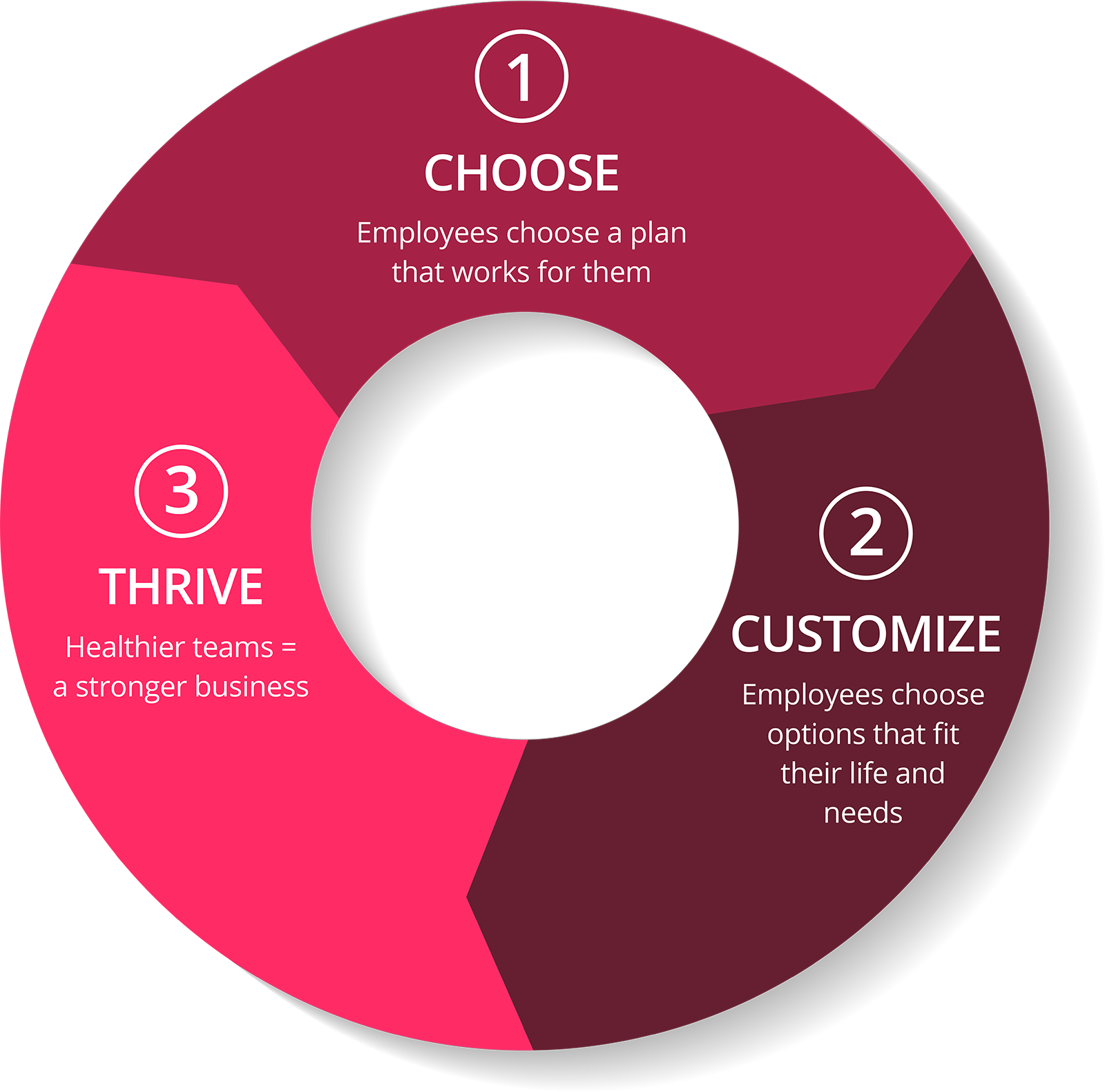
CHOICE Arrangement (formerly Individual Coverage Health Reimbursement Arrangement, or ICHRA for short) plans works differently than a typical group health plan. Instead of choosing one plan for your whole team, you set a fixed monthly amount per employee. They use it to buy their own individual health plan, off the ACA exchange. Reimbursements are tax-free for employees and tax-deductible for you, so the arrangement keeps the tax treatment people expect from employer-sponsored coverage.
It functions more like a healthcare stipend than a traditional plan. Employees choose what fits them: a high deductible plan, something more comprehensive, whatever makes sense for their situation. The decision sits with them, not with HR.
Utah has one of the stronger group health markets in the country. For a lot of local employers, a traditional group plan still beats a CHOICE Arrangement (ICHRA) on value, and that’s worth saying upfront.
That said, the math has shifted. The COVID-era premium subsidy expansion expired in January 2026, and employees who lost that extra help are now looking at full-price marketplace coverage. Millions of people have dropped off the ACA marketplace nationally this year, many without telling their employer. A CHOICE Arrangement (ICHRA) gives a small employer a way to step in without waiting for open enrollment or committing to a full group plan overnight. It also fits businesses that struggle to meet group participation minimums or teams spread across more than one state.


We start with a census, basic information on your team, and run quotes both directions: group and CHOICE Arrangement (ICHRA). That comparison is what tells us which structure actually fits, not a guess.
If CHOICE Arrangement (ICHRA) comes out ahead, we bring in a third-party administrator. For Utah-only teams, that’s often PeopleKeep. For multi-state businesses, we typically use Remodel Health, licensed in all 50 states, so enrollment stays off exchange. Employees then shop for a plan on the administrator’s platform and submit for reimbursement up to the amount you’ve set. You decide the dollar figure, they decide the plan.

Restaurants, hotels, and similar businesses that regularly struggle to meet group plan participation requirements

Employers with teams spread across Utah and other states

Businesses that want to cap their monthly cost at a flat dollar amount, no matter what premiums do

Employers who want to help employees who recently lost subsidized coverage, without waiting for open enrollment
Let’s schedule an appointment or jump on a call.
Q: Will a CHOICE Arrangement (ICHRA) save my business money?
A: Maybe. It depends on your group’s size, your employees’ ages and income, and whether they’d otherwise qualify for a marketplace subsidy. We run the group and CHOICE Arrangement (ICHRA) numbers side by side before recommending either one.
Q: Is CHOICE Arrangement (ICHRA) better than a traditional group plan in Utah?
A: Not usually, at least not by default. Utah’s group market is strong enough that most local employers still come out ahead with a traditional plan. CHOICE Arrangement (ICHRA) tends to fit specific situations better: multi-state teams, high-turnover industries, or businesses that can’t hit group participation minimums.
Q: What’s the difference between ICHRA and QSEHRA?
A: QSEHRA is smaller in scale and lets employees keep any ACA premium tax credit they qualify for, which a full CHOICE Arrangement (ICHRA) doesn’t allow. It’s often a better fit for very small employers who want to help without funding a full reimbursement amount.
Q: Does Ark handle compliance for an ICHRA?
A: We handle the insurance strategy: quotes, plan design, and coordinating with your administrator. For deeper compliance work, like payroll filings or ACA reporting, we bring in specialized partners and point you toward a CPA for tax-specific questions.
Q: How do we get started?
A: Send us a census of your team. We’ll run the numbers both ways, group and CHOICE Arrangement (ICHRA), then sit down and walk through what makes sense for your business.
Connect With Us On Social Media