Evaluating Health Insurance Broker Bids: A Guide For Getting Through The Process
Most business owners never learn how to evaluate health insurance broker bids, and that’s completely normal. After all, no one ever hands you a road map or explains how this process works. But if you get it wrong, it can affect your costs and compliance for the entire year.
So, what’s the best way to choose a broker you can trust? Here’s where to start:
How To Choose An Insurance Broker
The best way to find a good broker is actually through word of mouth. Ask other business owners for recommendations, talk to your friends and neighbors, and make sure you inquire about any bad experiences. You can also check with the state’s Department of Insurance to see if there are any complaints about brokers you’re considering.
All of this matters, because you can’t evaluate a broker from a bid or even their marketing material. Colleagues or fellow business owners can speak to how a broker performs during a renewal or when a problem arises.
“You want to find out how they handle things under pressure,” says Rebecca Yates, CEO of Ark Insurance Solutions. “Recommendations from within your personal circle are a great place to start.”
Not Every Business Needs Multiple Bids
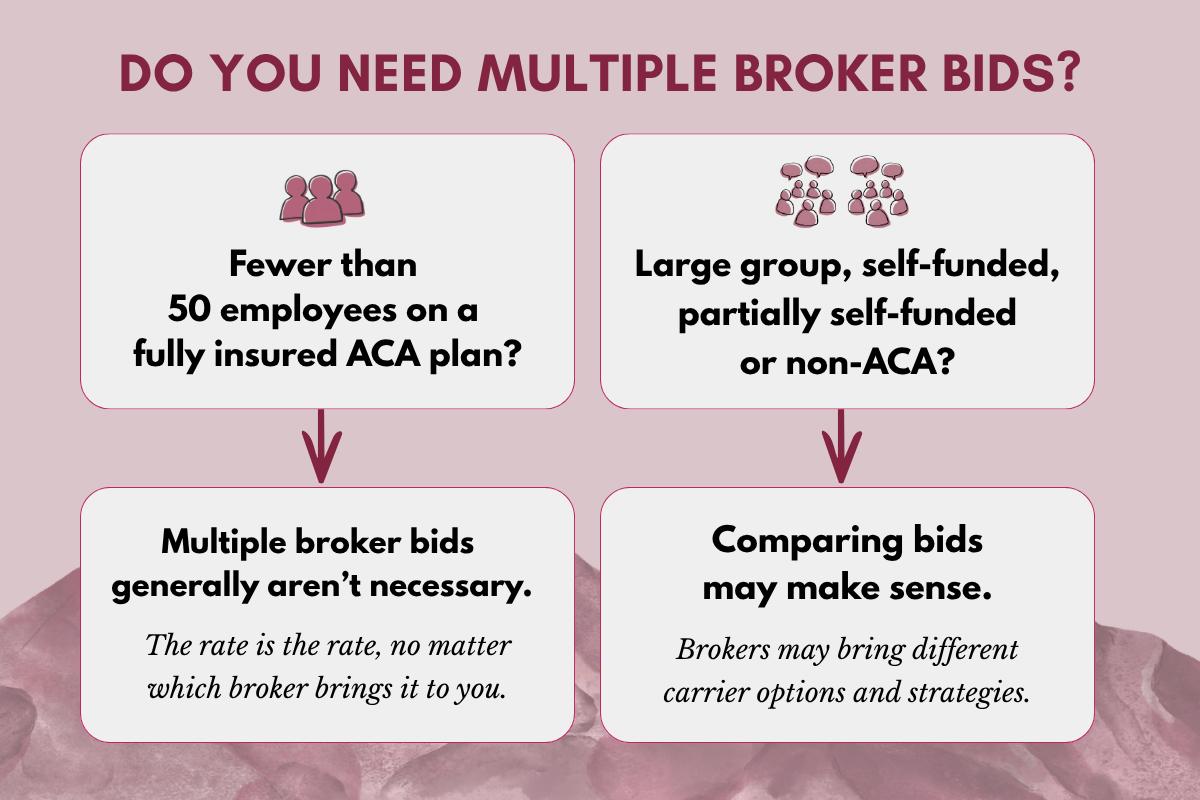
Do you have fewer than 50 employees on a fully insured ACA plan? Then you don’t need multiple bids. Every broker gets access to the same rates on that plan type. It’s guaranteed-issue and community-rated, so there’s no room for one broker to negotiate a better deal than another. The rate is the rate, no matter who brings it to you.
“This is why you’re going to want to find your broker first, then do the bidding. They can help guide you based on your number of employees,” said Yates.
Multiple bids make sense once you’re dealing with partial self-funding, self-funding, non-ACA plans, or a large group. Below that line, you just need to find one broker and work with them directly.
Watch For Numbers That Don’t Match
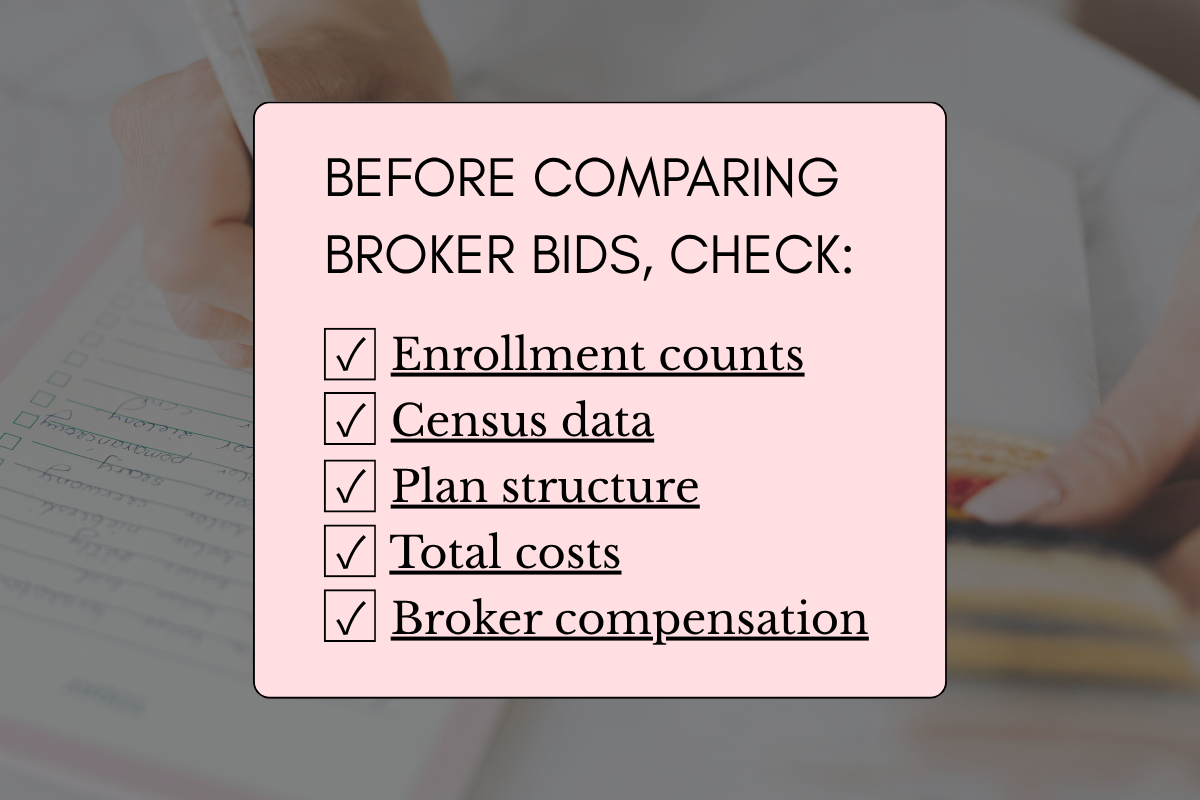
Not all bids compare the same metrics due to changing census data or simply human error. This can affect the bottom-line price you receive from each carrier, and it will skew your perception if you’re not careful.
“I can take one census and send it to every single insurance carrier, and they’ll all come back with a different count,” Yates says. “It doesn’t matter that I’m sending them all the same census data on the number of people enrolling. Oftentimes, none of them match.”
A good broker can help you make sure enrollment counts are what they should be when evaluating bids. That way you don’t end up comparing bids that don’t measure your group the same way.
Commission structure also deserves the same scrutiny. Brokers can get paid in several ways—through a per-member-per-month fee, carrier overrides, broker fees, reinsurance fees, network fees, and sometimes even trips or bonuses. None of that is necessarily a problem. But a broker who’s earning a hidden bonus for steering you toward a specific carrier doesn’t always have your best interests in mind. You should know that the law requires brokers to disclose their compensation. If yours doesn’t offer that information upfront, ask for it.
Give Yourself Plenty Of Lead Time
Rates change monthly, tied to the carrier’s own pricing cycles. If you move too slowly through the bid process, the rate you were quoted may no longer be available by the time you’re ready to sign.
A straightforward bid and install process typically takes approximately three to four months. Larger groups should plan for six months or more, because carriers take longer to underwrite bigger, more complex groups. Carriers also don’t release rates far in advance—small groups may get as little as 60 days’ notice, and renewals often come with even less lead time.
Your final rate can also shift after the bid, and it’s not necessarily the broker’s doing. If your group isn’t on a small, fully insured ACA plan, the underwriter reassesses risk based on who actually enrolls, not just who you initially expected to enroll. For example, a company might submit a census expecting 20 enrollees and end up with 16. Extenuating circumstances like this can move your installed rate up or down from what the bid originally showed.
A Good Broker Shows You Every Bid
Does your broker show you every bid they received, or just the ones that make their recommendation look best?
“I always show my clients all of the bids we received. Not every broker does that, but I want you to be able to see that we went to the whole market,” Yates says.
Seeing every bid, including the bad ones, is how you confirm nobody’s thumb is on the scale. A broker with real experience can tell you which plan actually fits your workforce, not just which one is cheapest.
You Can Switch Brokers Anytime
Most business owners think they’re stuck with their broker until renewal. But they’re not. Switching just requires an Agent of Record letter, a signed document that moves your account without touching your plan.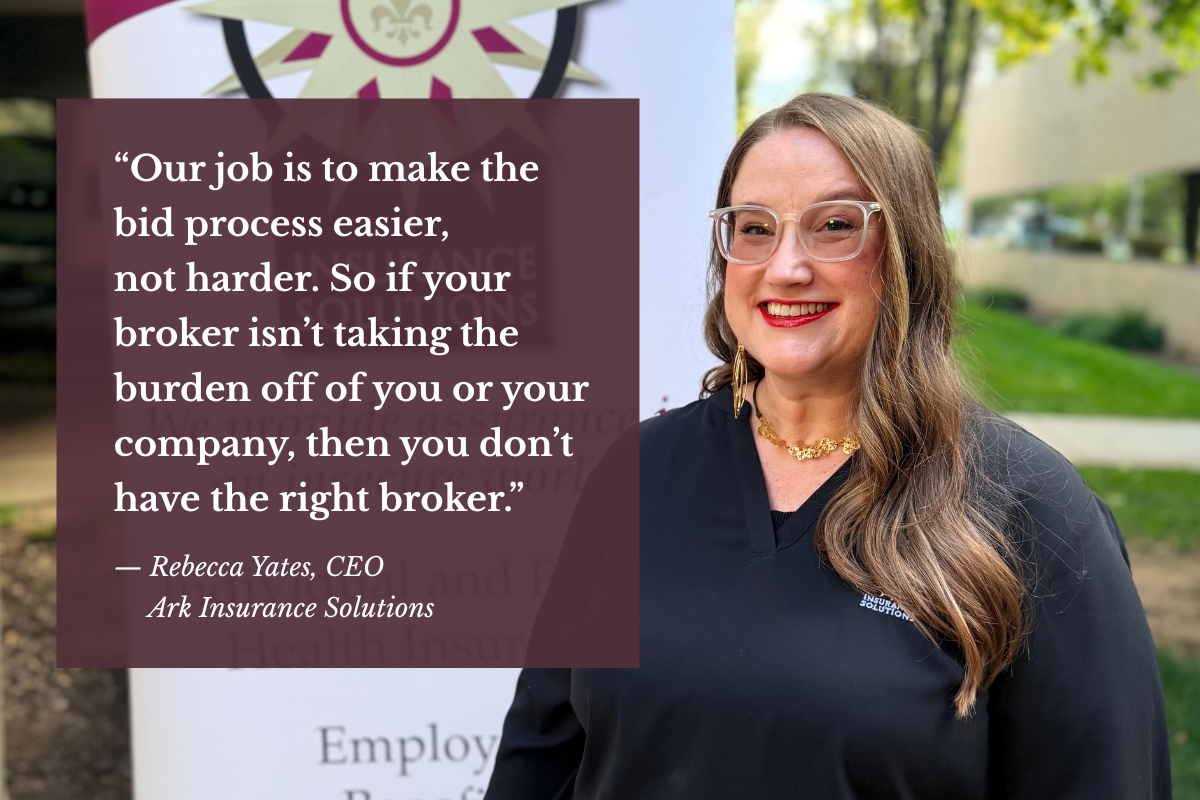
Carriers build in a five-day waiting period before the switch takes effect, and that delay exists for a reason—it gives your current broker a chance to confirm the switch is legitimate before it goes through. They cannot block the switch—they can only use those five days to raise a flag if needed, not to stop it.
Get A Second Opinion
You don’t need to switch brokers to get another set of eyes on bids you already have. Ark’s licensed consultants will review existing bids for an hourly fee, with no stake in which one you pick.
A consultant reviewing bids this way isn’t earning commission on the outcome, so there’s no incentive behind making a specific recommendation or hidden compensation that you don’t know about.
“Because I’m not the broker bidding on any of it, I don’t have a hat in the game,” Yates says. “We can be the honesty police and let you know if something is off.”
Evaluating broker bids isn’t really about comparing numbers on a page. It’s about knowing which numbers to trust, which broker to trust, and how much time to give yourself before rates start working against you.
If you’re heading into a bid process for the first time, or if you’re sitting on bids right now and aren’t sure what you’re looking at, Ark can help. Give us a call at 801-901-7800 or click here to schedule an appointment today.